The research center includes
the following laboratories:
- Ore preparation
- Mineral processing
- Hydrometallurgical processes
- Heap leaching
- Biotechnologies of mineral raw materials
- Analysis of mineral raw materials
- Mineralogical studies
- Pilot studies
We provide a full range of research services: from laboratory tests and study of the material composition to the development of technology for processing mineral raw materials.
We provide a full range of research services: from laboratory tests and study of the material composition to the development of technology for processing mineral raw materials.
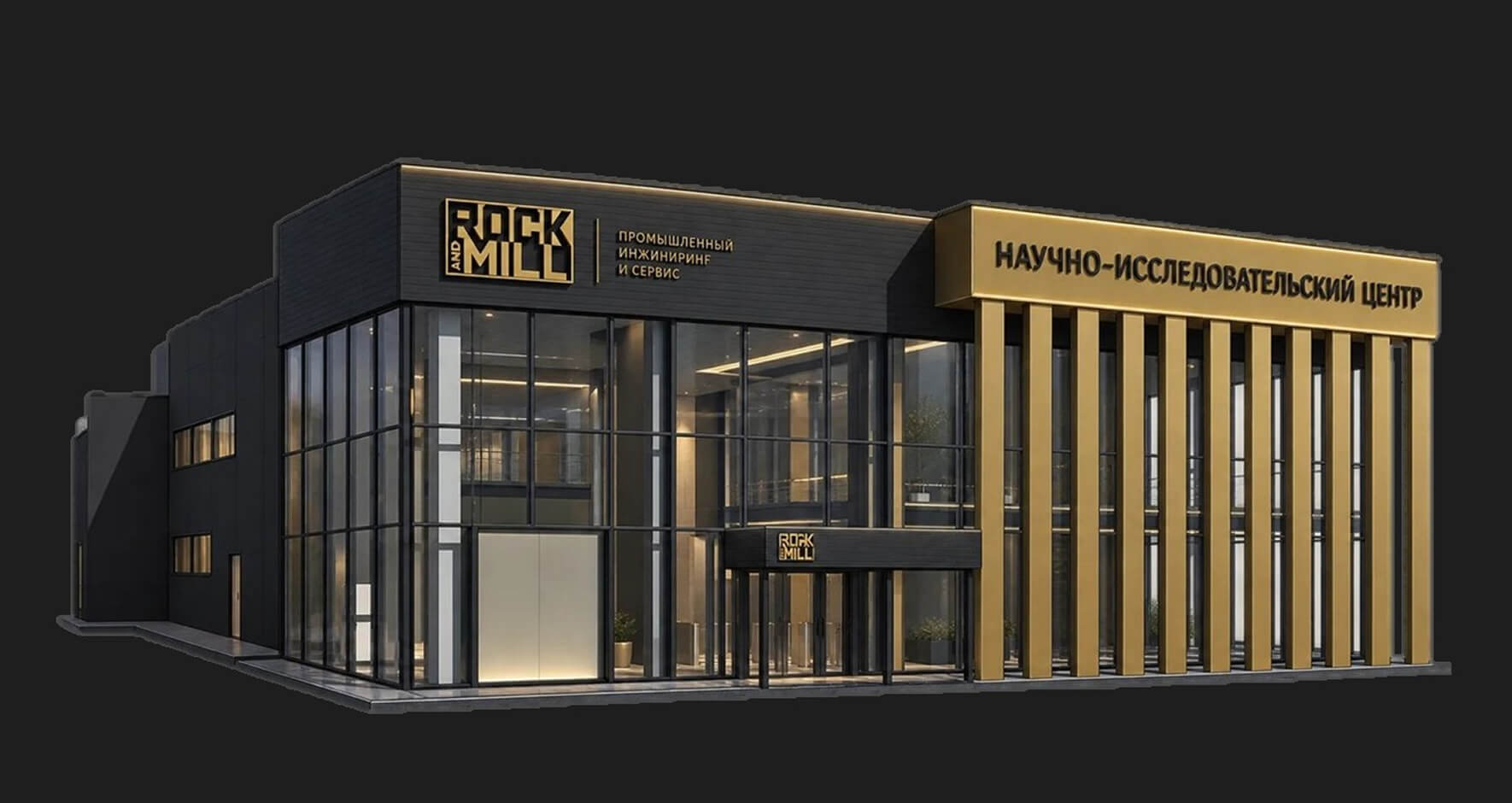
The research center includes
the following laboratories:
For more detailed information about our services, please call us at
or leave an enquiry
By pressing the «Send enquiry» button you accept the terms of the personal data processing policy
Determination of the chemical and phase composition of raw materials by modern instrumental methods. Monitoring of process performance at all processing stages. Expert review and verification of laboratory and industrial test results.
Comprehensive determination of the chemical composition of rocks, ores, concentrates, processing tailings and technological products. The analysis is performed using modern instrumental methods and allows for the determination of major, trace and rare elements to address the challenges of geological exploration, mining and mineral processing.
High-precision determination of gold, silver and other precious metals content in geological samples and processing products. Depending on the required accuracy and concentration range, fire assay and modern instrumental methods are used.
Simultaneous determination of a wide range of chemical elements in various sample types — from major components to trace concentrations. The method is used for geochemical research, raw material quality control and solving production tasks.
Rapid determination of the elemental composition of solid materials without complex sample preparation. The method is used for express control of ores and processing products.
Determination of the mass fraction of carbon and sulfur in ores, concentrates, metals, alloys and other materials. The results are used to assess raw material quality, for process control and to ensure compliance with regulatory requirements.
Comprehensive analytical support for mining companies, geological exploration organizations and research institutions. The center's specialists provide consultations on the selection of research methods, the development of analytical control programs and the interpretation of the results obtained.
Study of the strength, abrasive and rheological characteristics of ores and processing products. Assessment of crushability, grindability and filtration properties for equipment selection. Modeling of the behavior of raw materials in equipment and transport systems.
Uniaxial compressive strength (UCS) is intended to determine rock characteristics for use in calculations and design of mining operations and equipment, as well as for research and comparative testing. The uniaxial compressive strength of rocks is determined in accordance with the requirements of GOST 21153.2 – 84 "Rocks. Methods for determining the uniaxial compressive strength."
The Bond Impact Crushability Work Index (CWI) is a measure of material strength and is used to predict energy consumption at the primary, secondary and tertiary crushing stages when conventional jaw and cone crushers are used. The Bond impact crushing work index represents the ratio of the crusher's useful power (kW) to the hourly ore throughput (t/h). The CWI parameter value is used for the calculation and selection of industrial crushing equipment.
The Protodyakonov strength coefficient is intended to determine rock characteristics for use in calculations and design of mining operations and equipment, as well as for research and comparative testing. The rock strength coefficient according to M.M. Protodyakonov is determined in accordance with the requirements of GOST 21153.1-75 "Rocks. Method for determining the strength coefficient according to Protodyakonov."
The Bond Abrasion Index (Ai) is a measure of the abrasive effect of a material on the working surfaces of crushing and grinding equipment. It is used to predict the consumption of grinding media as well as liner wear rates in wet and dry process flows.
Bond Rod Mill Work Index (RWi)
The Bond Rod Mill Work Index (RWi) is a particle size reduction parameter that expresses a material's resistance to rod milling. Numerically, RWi represents the specific energy consumption (kWh/t) required to reduce the material size from a theoretically infinite size to a size at which 80% passes 1000 µm. The RWi parameter value is used for the calculation and selection of industrial rod milling equipment.
Bond Ball Mill Work Index (BWI)
The Bond Ball Mill Work Index (BWI) is a particle size reduction parameter that expresses a material's resistance to ball milling. Numerically, BWI represents the specific energy consumption (kWh/t) required to reduce the material size from a theoretically infinite size to a size at which 80% passes 100 µm. The BWI parameter value is used for the calculation and selection of industrial ball milling equipment.
The SMC Test® (SAG Mill Comminution) was developed by Steve Morrell of SMCTesting Pty Ltd (SMCT) in 2004 as a cost-effective way to evaluate the A, b and t10 parameters on samples provided as drill core, or in cases where the sample volume is insufficient for a full drop weight test (DWT). The SMC Test® results are used to determine the parameters A, b, ta, DWI, Mia, Mic, Mih and SCSE. Based on the SMC Test® results, it is possible to calculate the energy consumption of ore preparation circuits that include crushers, mills and high-pressure grinding rolls, select the appropriate industrial equipment, and perform modeling in JKSimMet.
The DWT (Drop Weight Tester) was developed by the Julius Kruttschnitt Mineral Research Centre (JKMRC) in 1992 for the design of industrial autogenous/semi-autogenous grinding mills in the JKSimMet software package. When modeling in JKSimMet, ore parameters are combined with the technical characteristics of the equipment and its operating conditions, which makes it possible to predict the performance of autogenous/semi-autogenous mills. In addition, the test generates source data for creating crusher models in the JKSimMet package.
The Point Load Test (PLT) is a rock strength index under point loading. It is widely used as an express method for assessing the rock strength index in field and laboratory conditions, with subsequent correlation to the uniaxial compressive strength. The PLT test is performed in accordance with the requirements of "ISRM (1985): Suggested method for determining point load strength. International Journal of Rock Mechanics and Mining Sciences and Geomechanical Abstract."
The High-Pressure Grinding Rolls (HPGR) test is performed to determine the parameters on the basis of which the characteristics (size type, power, operating mode) of an industrial HPGR can be calculated. The HPGR size type is selected so as to ensure the required process throughput and crushed product size. The main parameters for selecting an HPGR are the specific throughput, specific compressive force and specific energy consumption that must be provided to achieve the required result. HPGR technology is widely used in processing plants (concentrators) in ore preparation circuits and allows for a significant reduction in the energy consumption of ore processing.
Development and testing of process flowsheets on continuously operating installations. Obtaining reliable data for scale-up and design of industrial facilities. Optimization of operating parameters and assessment of process stability over time.
Determination of process performance parameters (sorption leaching, flotation, etc.) on an enlarged scale using a pilot plant is the next logical step after completing laboratory research. It is necessary in order to:
The process of determining parameters on a pilot plant includes the same main areas as in the laboratory, but on an enlarged and more complex scale.
The use of a pilot plant makes it possible not only to confirm laboratory data, but also to identify hidden problems that may arise during scale-up and to take timely decisions to eliminate them, which significantly reduces the risk of an unsuccessful investment in the construction of full-scale production.
Development and optimization of flotation, gravity and magnetic separation flowsheets. Study of the leaching, extraction and precipitation processes of target components. Selection of reagent regimes and assessment of the integrated recovery of valuable elements.
The GRG test (Gravity Recoverable Gold Test) is a laboratory method used in the mining industry to assess how well gold-bearing ore responds to gravity beneficiation (for example, on centrifugal concentrators). The test helps determine whether gravity beneficiation should be included in the process flowsheet and how to optimally set up the process.
"The flotation method of mineral raw material beneficiation (froth flotation) is a mineral beneficiation method based on differences in the physicochemical properties of the surface of sulfide minerals and gangue minerals. It is a physicochemical method of separating fine particles based on differences in their wettability by a liquid. During the process, particles that are poorly wetted by water (hydrophobic) selectively attach to gas bubbles or oil droplets and rise to the surface, forming froth. Particles that are well wetted by water (hydrophilic) remain in the liquid phase and settle to the bottom of the flotation cell. As a result of the process, valuable sulfide minerals are separated from the gangue and concentrated as a froth product, which is then processed into concentrates."
Flash flotation (rapid or sand flotation) is a special mineral beneficiation method used in the mining industry. The principle of flash flotation is similar to that of conventional (froth) flotation, but the difference lies in the use of coarser material (maximum size can reach 5 mm), as opposed to conventional flotation, where the material is finer (around 0.071 mm). Why is this needed? This approach has several advantages:
Cyanidation is a hydrometallurgical method for extracting precious metals (primarily gold and silver) from ores, concentrates and even beneficiation tailings. The essence of the process is that the metals are selectively dissolved in dilute solutions of alkali metal cyanides (e.g., NaCN, KCN). Sorption cyanidation. It combines leaching and recovery of dissolved gold and silver from the pulp using sorbents — anion exchange resins or activated carbons. This method is particularly effective for difficult-to-filter slimy ores.
Determination of cyanidation and sorption leaching parameters (sorption on activated carbon or resin) is a key stage in the processing of gold-bearing ores, especially for ores with low gold concentration.
Heap leaching is an industrial method for extracting valuable components (gold, silver) from ore using solvent reagents, including cyanide solutions. In this process, the ore after extraction is formed into special stacks (heaps) on a prepared site, and reagent solutions that dissolve the valuable minerals are percolated through them. The resulting pregnant solution is collected and subjected to further processing to recover the metal or other valuable component.
Gold phase analysis in ore is a set of studies that allows determining in which forms and in what proportions the precious metal is present in the rock. These data are critically important for selecting the optimal beneficiation and ore processing technology. Depending on the formation conditions and composition of the ore, gold may occur in several phase forms:
Determination of physicochemical properties of sorbents (resin, carbon) — mechanical strength, moisture content, bulk density
Thickening is the process of separating the liquid and solid phases in a pulp (suspension) by sedimentation of solid particles under the action of external forces. The purpose of the process is to obtain two products: a thickened (dense) sediment and a clarified liquid (overflow).
Thickening is based on the difference between the sedimentation rate of solid-phase particles and the movement of the liquid. As a result, the upper layers of the pulp are clarified (freed from the solid phase), while the particles concentrate in the lower layers and are compacted.
To intensify the process, reagents are often used:
We use cookies. By using the site, you agree to data processing for the purpose of collecting analytics. Cookies can be disabled at any time in your browser settings.